Business & Economics - Economic History
Discover a wide selection of economic history books and economic history textbooks. Explore economics books, best business books, and bestselling titles at our online bookstore today!
-
...and Forgive Them Their Debts: Lending, Foreclosure and Redemption from Bronze Age Finance to the Jubilee YearSelected "Best Books of 2018: Economics" by The Financial TimesIn ...and forgive them their debts, renowned economist Michael Hudson - one of the few who could see the 2008 financial crisis coming - takes us on an epic journey through the economies of ancient...
- $59.90 USD
$107.99 USD- $59.90 USD
- Unit price
- per
-
1493: Uncovering the New World Columbus CreatedNATIONAL BESTSELLER - A deeply engaging history of how European settlements in the post-Colombian Americas shaped the world--from the highly acclaimed author of 1491. - "Fascinating...Lively...A convincing explanation of why our world is the way it is." --The New York Times Book Review Presenting...
- $37.71 USD
$72.99 USD- $37.71 USD
- Unit price
- per
-
1873: The Rothschilds, the First Great Depression, and the Making of the Modern World"A lively and compelling account . . . The cumulative effect is impressive. . . . Ahamed tells his story with an easy fluency and a high velocity." --Trevor Jackson, The New York Times Book Review Named a Most Anticipated Book of 2026 by...
- $38.40 USD
- $38.40 USD
- Unit price
- per
-
1929: Inside the Greatest Crash in Wall Street History--And How It Shattered a NationNamed a Most Anticipated Book by New York Times Books Review, TIME, Washington Post, Associated Press, Town & Country, New York Post, and more From the bestselling author of Too Big to Fail, "the definitive history of the 2008 banking crisis,"* comes a spellbinding...
- $50.00 USD
$87.99 USD- $50.00 USD
- Unit price
- per
-
1929: Inside the Greatest Crash in Wall Street History--And How It Shattered a Nation"It is one of the best narrative histories I've read."--The Wall Street Journal Named a Most Anticipated Book by New York Times Books Review, TIME, Washington Post, Associated Press, Town & Country, New York Post, and more From the bestselling author of Too Big...
- $58.42 USD
$110.99 USD- $58.42 USD
- Unit price
- per
-
A Century of Plenty: A Story of Progress for Generations to Come"This book is as persuasive as it is useful. Well-written and accessible, yet the research is excellent."-Joel Mokyr, 2025 Nobel laureate in Economic Sciences Can you imagine even the poorest country in the world achieving the prosperity and quality of life of today's Switzerland-by...
- $37.47 USD
$66.99 USD- $37.47 USD
- Unit price
- per
-
A Culture of Growth: The Origins of the Modern EconomyWhy Enlightenment culture sparked the Industrial Revolution During the late eighteenth century, innovations in Europe triggered the Industrial Revolution and the sustained economic progress that spread across the globe. While much has been made of the details of the Industrial Revolution, what remains a...
- $46.20 USD
$88.99 USD- $46.20 USD
- Unit price
- per
-
A Fabulous Debt: The Epic Story of How Bonds Built the Modern WorldFrom veteran Financial Times journalist Robin Wigglesworth, an epic history of the debt that built the modern world. Long considered the "boring" corner of finance, bonds are anything but. They have funded everything from the Crusades to climate tech, Netflix series to AI data...
- $42.00 USD
- $42.00 USD
- Unit price
- per
-
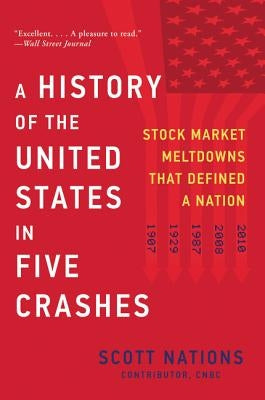
A History of the United States in Five Crashes: Stock Market Meltdowns That Defined a Nation"Excellent." -- Wall Street Journal"My hands-down financial book of the year. . . . An incredibly rich mine of market history. . . . Enlightening. . . . Meticulous. . . . Definitive. . . . Absolutely first class." -- Financial Advisor MagazineClearly and...
- $37.97 USD
$67.99 USD- $37.97 USD
- Unit price
- per
-
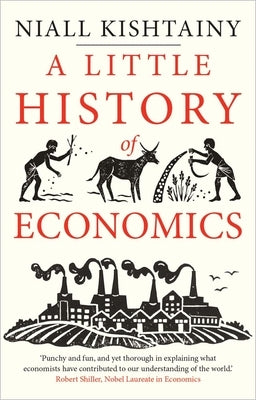
A Little History of EconomicsAn accessible account of the history of economics through the ideas of great thinkers Economics explains the world. For example, the fact that you're holding this book in your hands puts you in a special position. To many people around the globe, spending money...
- $30.00 USD
$53.99 USD- $30.00 USD
- Unit price
- per
-
A Little History of EconomicsA lively, inviting account of the history of economics, told through events from ancient to modern times and through the ideas of great thinkers in the field "A whistle-stop introduction to the great works and thinkers of each age, this is a clear and...
- $30.00 USD
$53.99 USD- $30.00 USD
- Unit price
- per
-
A Monetary and Fiscal History of the United States, 1961-2021From the New York Times bestselling author, the fascinating story of U.S. economic policy from Kennedy to Biden--filled with lessons for today In this book, Alan Blinder, one of the world's most influential economists and one of the field's best writers, draws on his...
- $42.77 USD
$81.99 USD- $42.77 USD
- Unit price
- per
-
A Short History of Financial EuphoriaThe world-renowned economist offers "dourly irreverent analyses of financial debacle from the tulip craze of the seventeenth century to the recent plague of junk bonds." --The Atlantic. With incomparable wisdom, skill, and wit, world-renowned economist John Kenneth Galbraith traces the history of the major...
- $29.14 USD
$55.99 USD- $29.14 USD
- Unit price
- per
-
A Splendid Exchange: How Trade Shaped the WorldA sweeping narrative history of world trade--from Sumer in 3000 BC to the firestorm over globalization today--that brilliantly explores trade's colorful and contentious past and provides fresh insights into social, political, cultural, and economic history, as well as a timely assessment of trade's future....
- $26.40 USD
$71.99 USD- $26.40 USD
- Unit price
- per
-
Africonomics: A History of Western IgnoranceA bold, concise history of Western economic interventions in Africa, by the former director of the Centre of African Studies at the University of Cambridge For centuries, Westerners have tried to "fix" African economies. From the abolition of slavery onward, missionaries, philanthropists, development economists,...
- $55.24 USD
$104.99 USD- $55.24 USD
- Unit price
- per
-
Against MoneyA powerful deconstruction of humanity's most influential invention, from the acclaimed economists J. W. Mason and Arjun Jayadev. Money is everywhere in our daily lives. It lurks in the swipe of a card at the grocery store, in looming student-loan debts, in the prices...
- $36.00 USD
- $36.00 USD
- Unit price
- per
-
Americana: A 400-Year History of American CapitalismNamed a Best Book of the Year by The Economist "A delightful tour through the businesses and industries that turned America into the biggest economy in the world. Not only is the book written in a light and informative style, it is cleverly constructed...
- $25.20 USD
- $25.20 USD
- Unit price
- per
-
An Inquiry Into the Nature and Causes of the Wealth of Nations (Vol. 1)First published in 1776, the year in which the American Revolution officially began, Smith's Wealth of Nations sparked a revolution of its own. In it Smith analyzes the major elements of political economy, from market pricing and the division of labor to monetary, tax,...
- $28.00 USD
$45.99 USD- $28.00 USD
- Unit price
- per
-
As Gods Among Men: A History of the Rich in the West"In this masterly book, [Alfani] offers an insightful long-run perspective and fascinating lessons for the future. A must-read!"--Thomas Piketty, author of Capital in the Twenty-First Century A sweeping narrative that shows how the rich historically justified themselves by helping their societies in times of...
- $39.34 USD
$75.99 USD- $39.34 USD
- Unit price
- per
-
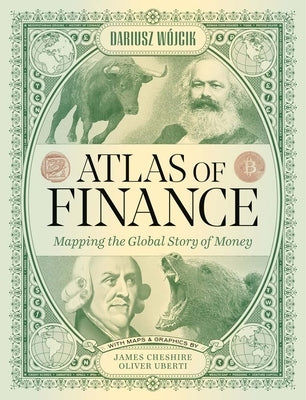
Atlas of Finance: Mapping the Global Story of MoneyA unique illustrated exploration of the development of finance that combines data from every part of the world and covers five thousand years of history "The book is a lot of fun. Data-fixated readers will enjoy unpicking its main content: a series of elegantly...
- $40.00 USD
- $40.00 USD
- Unit price
- per