Business & Economics - Economics - Macroeconomics
Explore macroeconomics books, including Keynes and the principle of macroeconomics. Shop economics books, best business books, bookkeeping guides, and bestselling titles at our online bookstore!
-
Arguing with Zombies: Economics, Politics, and the Fight for a Better FutureThere is no better guide than Paul Krugman to basic economics, the ideas that animate much of our public policy. Likewise, there is no stronger foe of zombie economics, the misunderstandings that just won't die. In Arguing with Zombies, Krugman tackles many of these...
- $35.90 USD
$64.99 USD- $35.90 USD
- Unit price
- per
-
Bitcoin Is for Everyone: Why Our Financial System Is Broken and Bitcoin Is the SolutionLet's face it--we all sense something is wrong. People have lost faith in the future. They feel left behind as the cost of homes, university fees, and even groceries continue to skyrocket. While the rich grow exponentially richer, life for the average person has...
- $39.97 USD
$71.99 USD- $39.97 USD
- Unit price
- per
-
Capitalism for All: Inclusive Economics and the Future-Proofing of AmericaDiscover how inclusive capitalism can restore American greatness and secure the nation's economic future for everyone Capitalism For All: Inclusive Economics and the Future-Proofing of America by John Hope Bryant presents a revolutionary framework for rebuilding American prosperity through economic inclusion rather than division....
- $48.00 USD
$91.99 USD- $48.00 USD
- Unit price
- per
-
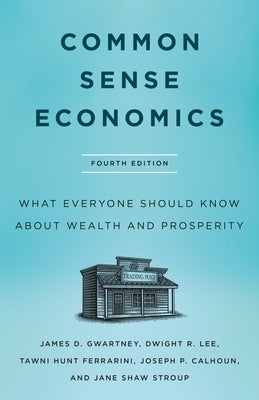
Common Sense Economics: What Everyone Should Know about Wealth and Prosperity, Fourth EditionThe fully revised and updated fourth edition of the classic Common Sense Economics.As the global economy recovers from the COVID-19 pandemic and debates over the future of work challenge our long-held preconceptions about what careers and the market can be, learning the basics of...
- $40.00 USD
$73.99 USD- $40.00 USD
- Unit price
- per
-
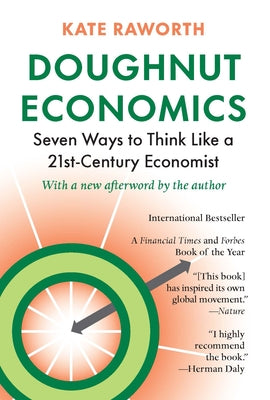
Doughnut Economics: Seven Ways to Think Like a 21st-Century Economist*The Sunday Times Bestseller*A Financial Times Book of the Year*A Forbes Book of the Year*Winner of the Transmission Prize 2018*Longlisted for the FT/McKinsey Business Book of the Year Award 2017*Porchlight "Best Business Book of 2017: Current Events & Public Affairs"The book that redefines economics...
- $29.94 USD
$75.99 USD- $29.94 USD
- Unit price
- per
-
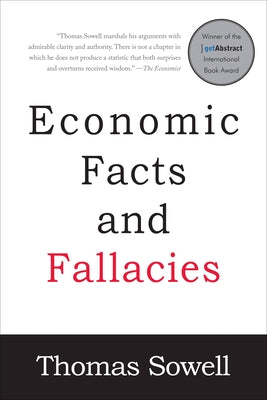
Economic Facts and FallaciesThomas Sowell "both surprises and overturns received wisdom" in this indispensable examination of widespread economic fallacies (The Economist) Economic Facts and Fallacies exposes some of the most popular fallacies about economic issues-and does so in a lively manner and without requiring any prior knowledge...
- $39.97 USD
$71.99 USD- $39.97 USD
- Unit price
- per
-
Economics 101, 2nd Edition: From Consumer Behavior to Competitive Markets--Everything You Need to Know about EconomicsDiscover the ins and outs of the economy with this engaging, informative, and easy-to-navigate 2nd edition guide with all-new entries and updates. Too often, textbooks turn the noteworthy details of economics into tedious discourse that would put even Joseph Stiglitz to sleep. This new...
- $29.11 USD
$55.99 USD- $29.11 USD
- Unit price
- per
-
Economics for Dummies: Book + Chapter Quizzes OnlineLearn the basics of economics and keep up to date on our ever-changing economy Whether you're studying economics in high school or college, or you're just interested in taking a peek into the complexities of how money moves, Economics For Dummies is the go-to...
- $29.98 USD
$81.99 USD- $29.98 USD
- Unit price
- per
-
Geostrategy by Design: How to Manage Geopolitical Risk in the New Era of GlobalizationFrom leading geostrategy experts comes an indispensable guide for executives seeking to thrive and create long-term value in the next era of global competition. How do executives position a company for growth when the geopolitical future is uncertain? Recent events in Ukraine and the...
- $30.00 USD
- $30.00 USD
- Unit price
- per
-
Global Economic History: A Very Short IntroductionVery Short Introductions: Brilliant, Sharp, Inspiring Why are some countries rich, and some poor? Does this status persist throughout time, and if so, why? How can a country escape poverty? In this Very Short Introduction, Robert C. Allen explores the interplay of geography, globalization,...
- $15.58 USD
- $15.58 USD
- Unit price
- per
-
Good Economics for Hard Times"A treasure trove of insight" (The Economist) from the winners of the Nobel Prize show how economics, when done right, can help us solve the thorniest social and political problems of our day. Figuring out how to deal with today's critical economic problems is...
- $39.40 USD
$75.99 USD- $39.40 USD
- Unit price
- per
-
Growth: A History and a ReckoningOne of Barack Obama's 10 Favorite Books of the YearOne of the New Yorker's Best Books of the YearFinalist for the Financial Times Best Book of the Year A vivid account of the past, present, and future of economic growth, showing how and why...
- $37.63 USD
$71.99 USD- $37.63 USD
- Unit price
- per
-
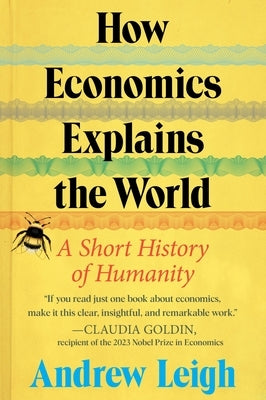
How Economics Explains the World: A Short History of Humanity"If you read just one book about economics, make it Andrew Leigh's clear, insightful, and remarkable (and short) work." --Claudia Goldin, recipient of the 2023 Nobel Prize in Economics and Henry Lee Professor of Economics at Harvard UniversityA sweeping, engrossing history of how economic...
- $44.57 USD
$85.99 USD- $44.57 USD
- Unit price
- per
-
How Economics Explains the World: A Short History of Humanity"If you read just one book about economics, make it Andrew Leigh's clear, insightful, and remarkable (and short) work." --Claudia Goldin, recipient of the 2023 Nobel Prize in Economics and Henry Lee Professor of Economics at Harvard UniversityA sweeping, engrossing history of how economic...
- $21.58 USD
- $21.58 USD
- Unit price
- per
-
InflationFrom an award-winning professor of economics, an accessible and comprehensive introduction to what causes, and what can address, increases in the cost of living. Anyone who has balked at the price of a carton of eggs or lamented the cost of a tank of...
- $39.90 USD
$71.99 USD- $39.90 USD
- Unit price
- per
-
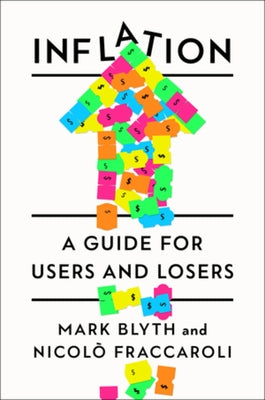
Inflation: A Guide for Users and LosersInflation is back, and its impact can be felt everywhere, from the grocery store to the mortgage market to the results of elections around the world. What's more, tariffs and trade wars threaten to accelerate inflation again. Yet the conventional wisdom about inflation is...
- $50.50 USD
$95.99 USD- $50.50 USD
- Unit price
- per
-
Keynes for Our TimesFrom John Maynard Keynes's foremost biographer, an illuminating look at how the economist's ethical approach can be used to address today's pressing problemsJohn Maynard Keynes (1883-1946) was arguably the most important economist of the twentieth century; his ideas have fundamentally altered the way governments...
- $33.60 USD
- $33.60 USD
- Unit price
- per
-
Ladder or Lottery: Economic Promises and the Reality of Who Gets AheadWho really gets ahead in a market-based economy. This book asks the reader a simple question: Is our economy a ladder or a lottery? Are people able to control their position on the economic spectrum by their actions? Some argue that, in our market-based...
- $41.92 USD
- $41.92 USD
- Unit price
- per
-
MacroeconomicsThe non-economist's accessible, pocket-sized refresher on the basics of macroeconomics and how it affects local and global economies--from an academic economist and 2-time Chilean Finance Minister.Macroeconomics takes a broad perspective on the economy of a country or region; it studies economic changes in the...
- $26.34 USD
- $26.34 USD
- Unit price
- per
-
Macroeconomics for Dummies, U.S. EditionMaster the big picture of economics with clear explanations Macroeconomics For Dummies, 2nd U.S. Edition brings the world of economic theory down to earth with accessible explanations that anyone can follow. This comprehensive guide tackles the intimidating subject of macroeconomics - the study of...
- $32.38 USD
- $32.38 USD
- Unit price
- per