Computers - Data Science - Neural Networks
Delve into data science books, Python Data Science Handbook, neural networks, and graph neural network books. Shop The Art of Computer Programming, computer science, networking, and bestsellers at our online bookstore!
-
Artificial Intelligence for Developers in Easy StepsUnlock the Power of Artificial Intelligence (AI): The essential guide for Developers.ArtificialIntelligence for Developers in easy steps is your fast-trackguide to mastering AI and enhancing your coding skills. Whether you're anaspiring developer or a student familiar with Python, this practical guideempowers you to build...
- $37.97 USD
$67.99 USD- $37.97 USD
- Unit price
- per
-
Artificial Intelligence Fundamentals for Business Leaders: Up to Date With Generative AI2024 Edition. Free access to the AI Academy! The perfect guide to help non-technical business leaders understand the power of AI. Completely up to date with the latest advancements in generative AI. Part of the Byte-sized Learning AI series by Now Next Later AI,...
- $43.18 USD
- $43.18 USD
- Unit price
- per
-
Deep LearningAn accessible introduction to the artificial intelligence technology that enables computer vision, speech recognition, machine translation, and driverless cars.Deep learning is an artificial intelligence technology that enables computer vision, speech recognition in mobile phones, machine translation, AI games, driverless cars, and other applications. When...
- $37.90 USD
$67.99 USD- $37.90 USD
- Unit price
- per
-
Deep Learning with Python, Third EditionThe bestselling book on Python deep learning, now covering generative AI, Keras 3, PyTorch, and JAX! Deep Learning with Python, Third Edition puts the power of deep learning in your hands. This new edition includes the latest Keras and TensorFlow features, generative AI models,...
- $127.98 USD
$229.99 USD- $127.98 USD
- Unit price
- per
-
Deep Learning with Pytorch, Second Edition: Training and Applying Deep Learning and Generative AI ModelsGet a free eBook (PDF or ePub) from Manning as well as access to the online liveBook format (and its AI assistant that will answer your questions in any language) when you purchase the print book. PyTorch core developer Howard Huang updates the bestselling...
- $99.98 USD
$177.99 USD- $99.98 USD
- Unit price
- per
-
Hands-On Machine Learning with Scikit-Learn, Keras, and Tensorflow: Concepts, Tools, and Techniques to Build Intelligent SystemsThrough a recent series of breakthroughs, deep learning has boosted the entire field of machine learning. Now, even programmers who know close to nothing about this technology can use simple, efficient tools to implement programs capable of learning from data. This bestselling book uses...
- $112.48 USD
$199.99 USD- $112.48 USD
- Unit price
- per
-
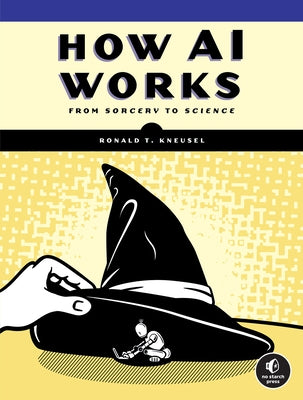
How AI Works: From Sorcery to ScienceAI isn't magic. How AI Works demystifies the explosion of artificial intelligence by explaining--without a single mathematical equation--what happened, when it happened, why it happened, how it happened, and what AI is actually doing "under the hood." Artificial intelligence is everywhere--from self-driving cars, to...
- $47.34 USD
$89.99 USD- $47.34 USD
- Unit price
- per
-
LLM Engineer's Handbook: Master the art of engineering large language models from concept to productionStep into the world of LLMs with this practical guide that takes you from the fundamentals to deploying advanced applications using LLMOps best practicesKey Features: - Build and refine LLMs step by step, covering data preparation, RAG, and fine-tuning- Learn essential skills for deploying...
- $104.33 USD
$181.99 USD- $104.33 USD
- Unit price
- per
-
Machine Learning and Artificial Intelligence: Concepts, Algorithms and ModelsMastering AI, machine learning, and data science often means piecing together concepts scattered across countless resources, statistics, and visualizations to foundational models and large language models. This book, the result of eight years of effort, brings it all together in one accessible, engaging package....
- $152.12 USD
$276.99 USD- $152.12 USD
- Unit price
- per
-
Machine Learning with PyTorch and Scikit-Learn: Develop machine learning and deep learning models with PythonThis book of the bestselling and widely acclaimed Python Machine Learning series is a comprehensive guide to machine and deep learning using PyTorch s simple to code framework.Purchase of the print or Kindle book includes a free eBook in PDF format.Key Features: - Learn...
- $95.63 USD
$166.99 USD- $95.63 USD
- Unit price
- per
-
Practical Deep Learning, 2nd Edition: A Python-Based IntroductionDeep learning made simple. Dip into deep learning without drowning in theory with this fully updated edition of Practical Deep Learning from experienced author and AI expert Ronald T. Kneusel. After a brief review of basic math and coding principles, you'll dive into hands-on...
- $91.28 USD
$159.99 USD- $91.28 USD
- Unit price
- per
-
Prompt Engineering for Generative AI: Future-Proof Inputs for Reliable AI OutputsLarge language models (LLMs) and diffusion models such as ChatGPT and Stable Diffusion have unprecedented potential. Because they have been trained on all the public text and images on the internet, they can make useful contributions to a wide variety of tasks. And with...
- $104.33 USD
$181.99 USD- $104.33 USD
- Unit price
- per
-
You Look Like a Thing and I Love You: How Artificial Intelligence Works and Why It's Making the World a Weirder Place"A deft, informative, and often screamingly funny primer on the ways that machine learning can (and often does) go wrong." --Margaret Harris, Physics World "You look like a thing and I love you" is one of the best pickup lines ever...according to an artificial...
- $39.97 USD
$71.99 USD- $39.97 USD
- Unit price
- per