Computers - Information Theory
Explore our collection of information theory books, including the classic "Claude Shannon Information Theory Book." Dive into computer science, networking, and the art of programming at our online bookstore!
-
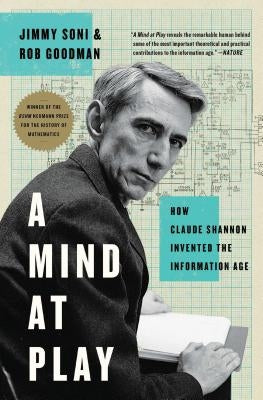
A Mind at Play: How Claude Shannon Invented the Information AgeWinner of the Neumann Prize for the History of Mathematics "We owe Claude Shannon a lot, and Soni & Goodman's book takes a big first step in paying that debt." --San Francisco Review of Books "Soni and Goodman are at their best when they...
- $24.00 USD
$67.99 USD- $24.00 USD
- Unit price
- per
-
Everyday Information ArchitectureThe design of information on the web changes the way people find, understand, and use that information-for better or for worse. Lisa Maria Marquis shows you how to leverage the principles and practices of information architecture in order to craft more thoughtful and effective...
- $42.83 USD
$81.99 USD- $42.83 USD
- Unit price
- per
-
Hands-On Generative AI with Transformers and Diffusion ModelsLearn to use generative AI techniques to create novel text, images, audio, and even music with this practical, hands-on book. Readers will understand how state-of-the-art generative models work, how to fine-tune and adapt them to their needs, and how to combine existing building blocks...
- $99.98 USD
$177.99 USD- $99.98 USD
- Unit price
- per
-
ITIL(R) 4 Essentials: Your essential guide for the ITIL 4 Foundation exam and beyondITIL is the leading best-practice framework for ITSM (IT service management) and is globally adopted in both the public and private sectors. The latest evolution of the framework - ITIL 4 - has been significantly updated and addresses new ITSM challenges, includes new technologies...
- $85.20 USD
$145.99 USD- $85.20 USD
- Unit price
- per
-
MCP for DummiesExpert guidance on deploying secure, standardized AI integrations in any development context MCP For Dummies is the essential guide to getting started with the open-source standard that's transforming how businesses deploy AI. With Model Context Protocol (MCP), you can connect AI to real-world data,...
- $47.98 USD
- $47.98 USD
- Unit price
- per
-
Nexus: A Brief History of Information Networks from the Stone Age to AI#1 NEW YORK TIMES BESTSELLER - From the author of Sapiens comes the groundbreaking story of how information networks have made, and unmade, our world. "Strikingly original . . . A historian whose arguments operate on the scale of millennia has managed to capture...
- $50.00 USD
$87.99 USD- $50.00 USD
- Unit price
- per
-
Ontology Pipeline: A Framework for Knowledge EngineeringBuild semantic knowledge systems with trusted and AI-ready taxonomies, ontologies, and knowledge graphs.Ontology Pipeline gives data leaders, semantic engineers, ontologists, taxonomists, knowledge managers, librarians, AI architects, and enterprise data teams a practical framework for turning messy organizational language into structured, machine-readable knowledge. Instead of...
- $51.14 USD
- $51.14 USD
- Unit price
- per
-
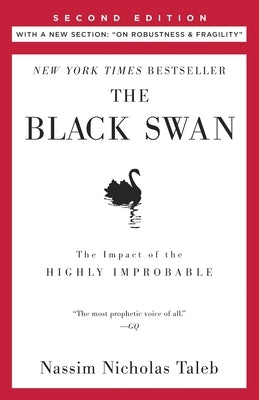
The Black Swan: Second Edition: The Impact of the Highly Improbable: With a New Section: On Robustness and FragilityNEW YORK TIMES BESTSELLER - The most influential book of the past seventy-five years: a groundbreaking exploration of everything we know about what we don't know, now with a new section called "On Robustness and Fragility." A black swan is a highly improbable event...
- $25.20 USD
$51.99 USD- $25.20 USD
- Unit price
- per
-
The Simulated Multiverse: An MIT Computer Scientist Explores Parallel Universes, the Simulation Hypothesis, Quantum Computing and the Mandela EffectDo multiple versions of ourselves exist in parallel universes living out their lives in different timelines? In this follow up to his bestseller, The Simulation Hypothesis, MIT Computer Scientist and Silicon Valley Game Pioneer Rizwan Virk explores these topics from a new lens: that...
- $50.50 USD
$95.99 USD- $50.50 USD
- Unit price
- per