Computers - Security - Network Security
Purchase top-rated computer security books, cyber security books, and network security essentials to strengthen your digital defenses. Explore our best-selling collection at your online bookstore today!
-
Blown to Bits: Your Life, Liberty, and Happiness After the Digital ExplosionWhat you must know to protect yourself today The digital technology explosion has blown everything to bits--and the blast has provided new challenges and opportunities. This second edition of Blown to Bits delivers the knowledge you need to take greater control of your information...
- $29.98 USD
- $29.98 USD
- Unit price
- per
-
Bulletproof TLS and PKI, Second Edition: Understanding and Deploying SSL/TLS and PKI to Secure Servers and Web ApplicationsBulletproof TLS and PKI is a complete guide to using TLS encryption and PKI to deploy secure servers and web applications. Written by Ivan Ristic, author of the popular SSL Labs web site, this book will teach you everything you need to know to...
- $115.00 USD
$203.99 USD- $115.00 USD
- Unit price
- per
-
Cisa Certified Information Systems Auditor Study Guide and Practice Tests Bundle: Covers 2024 Exam ObjectivesTwo bestselling CISA guides in one serious study set This value-packed packed set for the serious CISA certification candidate combines the all-new CISA Certified Information Systems Auditor Study Guide: Covers 2024-2029 Exam Objectives with a new collection of Practice Exams and online practice test...
- $142.50 USD
- $142.50 USD
- Unit price
- per
-
Comptia A+ Complete Certification Kit: Core 1 Exam 220-1201 and Core 2 Exam 220-1202A comprehensive bundle of authoritative prep resources for the A+ certification exams: Study, practice, and review--the Sybex way! Based on the popular Sybex Study Guide approach, the CompTIA A+ Complete Certification Kit, 6th Edition explains all the most recent changes to the new Core...
- $144.00 USD
$258.99 USD- $144.00 USD
- Unit price
- per
-
Comptia A+ Complete Practice Tests: Core 1 Exam 220-1201 and Core 2 Exam 220-1202Prepare for the updated A+ certification exams with hundreds of accurate practice questions from the experts at Sybex The fourth edition of the CompTIA A+ Complete Practice Tests: Core 1 Exam 220-1201 and Core 2 Exam 220-1202 offers hundreds of domain-by-domain practice questions specifically...
- $60.00 USD
$107.99 USD- $60.00 USD
- Unit price
- per
-
Comptia A+ Complete Review Guide: Core 1 Exam 220-1201 and Core 2 Exam 220-1202Prepare for the new A+ certification exams with this updated companion resource to the CompTIA A+ Complete Study Guide In the sixth edition of CompTIA A+ Complete Review Guide: Core 1 Exam 220-1201 and Core 2 Exam 220-1202, A+ certified tech educator Troy McMillan...
- $42.00 USD
- $42.00 USD
- Unit price
- per
-
Comptia A+ Complete Study Guide, 2-Volume Set: Volume 1 Core 1 Exam 220-1201 and Volume 2 Core 2 Exam 220-1202Your complete, accurate resource for the updated CompTIA A+ Core 1 and Core 2 exams In the newly revised sixth edition of CompTIA A+ Complete Study Guide 2-Volume Set: Volume 1 Core 1 Exam 220-1201 and Volume 2 Core 2 Exam 220-1202, you'll discover...
- $84.78 USD
$147.99 USD- $84.78 USD
- Unit price
- per
-
CompTIA Network+ Certification All-in-One Exam Guide, Ninth Edition (Exam N10-009)This up-to-date All-in-One exam guide delivers complete coverage of every topic on the N10-009 version of the CompTIA Network+ Certification examGet complete coverage of all the CompTIA Network+ exam objectives inside this comprehensive resource. Written by Jonathan Weissman and created and edited by Mike...
- $81.82 USD
$139.99 USD- $81.82 USD
- Unit price
- per
-
Comptia Security+ Certification Kit: Exam Sy0-701Everything you need to prepare for and take the Security+ exam! The CompTIA Security+ Certification Kit includes CompTIA Security+ Study Guide: Exam SY0-701, 9th Edition, and the CompTIA Security+ Practice Tests: Exam SY0-701, 3rd Edition. Together, both books provide comprehensive review for the CompTIA...
- $90.00 USD
$161.99 USD- $90.00 USD
- Unit price
- per
-
Comptia Security+ Study Guide with Over 500 Practice Test Questions: Exam Sy0-701Master key exam objectives and crucial cybersecurity concepts for the CompTIA Security+ SY0-701 exam, along with an online test bank with hundreds of practice questions and flashcards In the newly revised ninth edition of CompTIA Security+ Study Guide: Exam SY0-701, veteran cybersecurity professionals and...
- $75.00 USD
$128.99 USD- $75.00 USD
- Unit price
- per
-
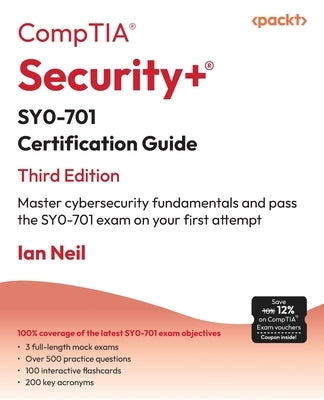
CompTIA(R) Security+(R) SY0-701 Certification Guide - Third Edition: Master cybersecurity fundamentals and pass the SY0-701 exam on your first attempt100% coverage of the latest CompTIA Security+ SY0-701 exam objectives ensures you study what you need to passUnlocks access to an interactive online platform featuring over 500 practice test questions, 100 flashcards, and 200 key acronyms to enhance your Security+ exam preparationKey Features: -...
- $95.63 USD
$166.99 USD- $95.63 USD
- Unit price
- per
-
Container Security: Fundamental Technology Concepts That Protect Cloud Native ApplicationsAs containerized and cloud native applications become foundational to modern software infrastructure, the need for a deep, conceptual understanding of their security implications has never been more urgent. Container Security, second edition, offers a rigorous yet practical examination of the technologies that underpin container...
- $67.18 USD
- $67.18 USD
- Unit price
- per
-
Cyber War: The Next Threat to National Security and What to Do about ItAn essential, eye-opening book about cyberterrorism, cyber war, and the next great threat to our national security. "Cyber War may be the most important book about national security policy in the last several years." -SlateFormer presidential advisor and counter-terrorism expert Richard A. Clarke sounds...
- $36.54 USD
$69.99 USD- $36.54 USD
- Unit price
- per
-
Cybersecurity All-In-One for DummiesOver 700 pages of insight into all things cybersecurity Cybersecurity All-in-One For Dummies covers a lot of ground in the world of keeping computer systems safe from those who want to break in. This book offers a one-stop resource on cybersecurity basics, personal security,...
- $71.40 USD
$119.99 USD- $71.40 USD
- Unit price
- per
-
Cybersecurity for DummiesGet the know-how you need to safeguard your data against cyber attacks Cybercriminals are constantly updating their strategies and techniques in search of new ways to breach data security--shouldn't you learn how to keep yourself and your loved ones safe? Fully updated with information...
- $47.34 USD
$89.99 USD- $47.34 USD
- Unit price
- per
-
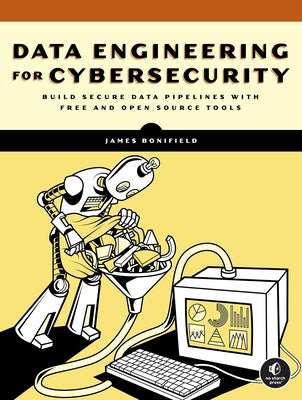
Data Engineering for Cybersecurity: Build Secure Data Pipelines with Free and Open-Source ToolsTurn raw logs into real intelligence. Security teams rely on telemetry--the continuous stream of logs, events, metrics, and signals that reveal what's happening across systems, endpoints, and cloud services. But that data doesn't organize itself. It has to be collected, normalized, enriched, and secured...
- $71.40 USD
$119.99 USD- $71.40 USD
- Unit price
- per
-
Digital Ethics in the Age of AI: Navigating the ethical frontier today and beyondIn an era characterised by the remarkable growth of AI, there emerges a profound ethical dimension that demands our attention. This book presents a timely and significant addition to the ongoing discourse around the ethical implications of AI in general, as well as the...
- $71.40 USD
$119.99 USD- $71.40 USD
- Unit price
- per
-
Ghost in the Wires: My Adventures as the World's Most Wanted HackerIn this "intriguing, insightful and extremely educational" novel, the world's most famous hacker teaches you easy cloaking and counter-measures for citizens and consumers in the age of Big Brother and Big Data (Frank W. Abagnale). Kevin Mitnick was the most elusive computer break-in artist...
- $39.40 USD
$75.99 USD- $39.40 USD
- Unit price
- per
-
Hacking and Security: The Comprehensive Guide to Penetration Testing and CybersecurityUncover security vulnerabilities and harden your system against attacks! With this guide you'll learn to set up a virtual learning environment where you can test out hacking tools, from Kali Linux to hydra and Wireshark. Then expand your understanding of offline hacking, external safety...
- $81.75 USD
$139.99 USD- $81.75 USD
- Unit price
- per
-
Hacking for DummiesThink like a hacker to protect your sensitive information To safeguard your private data from prying eyes, it helps to understand how hackers do what they do. Hacking For Dummies gives you the tools you need to step into a hacker's shoes and discover...
- $47.34 USD
$89.99 USD- $47.34 USD
- Unit price
- per